

America Is Being Told to Eat More Seafood.
This Time, the System Is Finally Catching Up.
For years, nutrition experts have said it.
Doctors have echoed it.
The science has been settled.
Now, the U.S. government has put it in writing — clearly, prominently, and without ambiguity: Americans need to eat more seafood.
The newly released 2025–2030 Dietary Guidelines for Americans elevate seafood from a “good option” to a foundational protein — one that should appear on plates twice a week or more, across schools, hospitals, homes, and restaurants. That shift is not cosmetic. It is structural. And it sends a powerful signal through the entire food system.
For the seafood industry, this is validation.
For restaurants and gastropubs, it is direction.
For school food programs, it is a mandate.
And for public health, it is a long-overdue course correction.
The question now is no longer whether Americans should eat more seafood.
It’s whether the industry can remove the friction that has historically stood in the way.
Why This Moment Matters — Beyond the Guidelines
The National Fisheries Institute has welcomed the new guidelines, calling out their clear, user-friendly format and their ability to help Americans understand the benefits of seafood-rich diets.
But the real importance of the guidelines lies in what follows them.
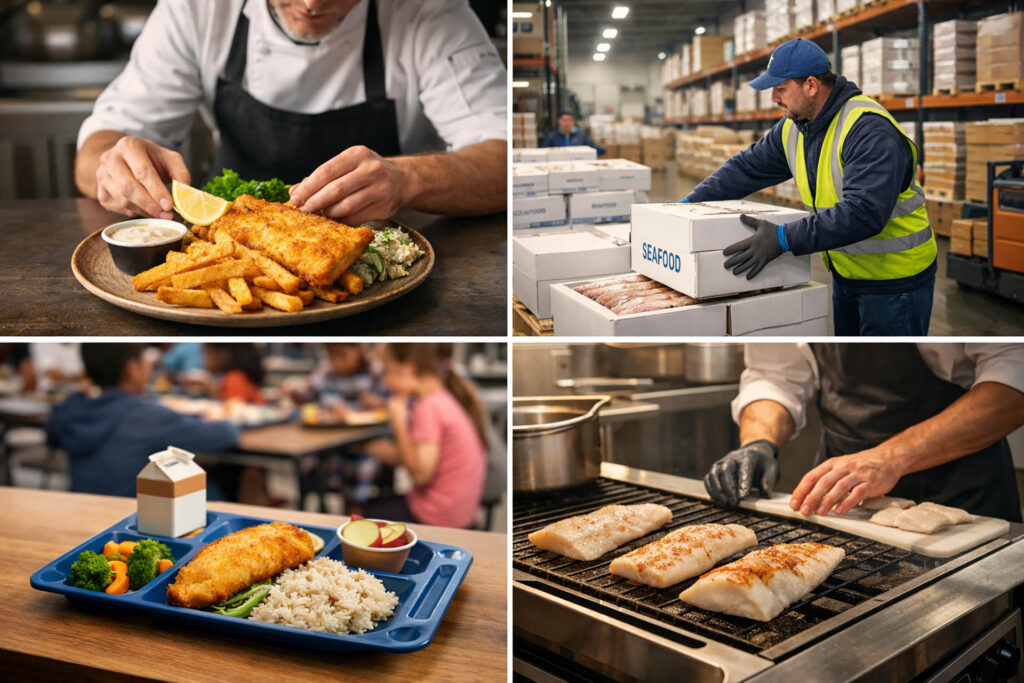
Dietary Guidelines don’t live on government websites. They cascade into:
- School lunch standards
- Hospital and institutional menus
- Corporate foodservice contracts
- Nutrition education
- Restaurant menu planning
- Consumer expectations
When seafood is elevated at the federal level, volume follows. When volume follows, systems must perform.
That’s where the pressure point has always been — not demand, but execution.
The Gap: Americans Are Told to Eat More Seafood — While the System Makes It Harder
Despite decades of nutritional advocacy, the reality is stark: most Americans eat far less seafood than recommended.
For operators, the barriers are rarely philosophical. They are practical — and increasingly economic.
Restaurants and institutions contend with price volatility, inconsistent supply, and variable quality, pressures now compounded by tariffs and ongoing trade uncertainty that continue to push costs upward across the supply chain. The result is a contradiction that operators feel immediately: Americans are being encouraged to eat more seafood at the same time seafood risks becoming more expensive.
Independent restaurants need seafood that performs every service, every day, without surprises. School districts and institutional kitchens face even tighter constraints, balancing healthier menu mandates with fixed budgets, simplified preparation, and strict specifications.
Chefs and operators don’t debate the benefits of seafood. They debate reliability. When pricing swings, specifications shift, or product varies from box to box, seafood becomes an operational risk — regardless of consumer demand or nutritional value.
In school foodservice, the stakes are even higher. Nutrition leaders are asked to deliver healthier meals with limited labor, limited prep time, and little room for cost overruns. Seafood only works when it is consistent, affordable, and easy to execute.
This is the gap the new Dietary Guidelines expose — not in science, but in infrastructure.
In other words, the barrier to seafood consumption has rarely been belief.
It has been reliability, affordability, and operational fit — challenges that policy alone cannot solve.
What Changes When the Supply Chain Is Built for the Real World
If Americans are going to eat more seafood — and all signals suggest they will — the industry must shift from selling product to delivering solutions.
That means:
- Species that work on menus, not just on paper
- Cuts and formats designed for kitchens, not just cases
- Consistent quality week after week, not “good when available”
- Predictable pricing structures that operators can plan around
- Compatibility with existing distributor relationships, not disruption
This is where companies like Southstream play a critical role — quietly, structurally, and at scale.
Southstream’s approach is not about novelty. It’s about removing friction:
- Sourcing wild-caught, responsibly managed whitefish
- Standardizing specifications so chefs know exactly what they’re getting
- Working with distributors and reps — not around them
- Making seafood dependable enough to become a staple, not a risk
When seafood behaves like a reliable center-of-the-plate protein, it stops being an exception — and starts becoming habit.
Restaurants, Gastropubs, and Schools: Where Policy Becomes Practice
The guidelines may be written in Washington, but their success will be measured in:
- School cafeterias
- Neighborhood gastropubs
- Healthcare kitchens
- Fast-casual and family dining
- High-volume institutional settings
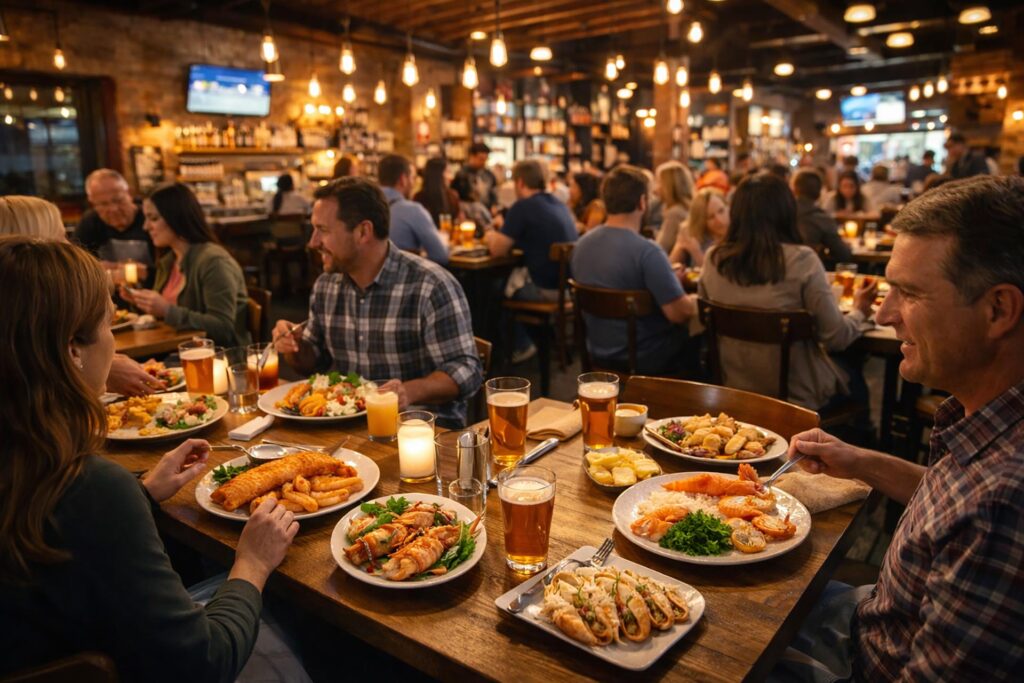
These are environments where margins are thin, labor is stretched, and consistency is non-negotiable.
Fish & chips that hold through service.
Seafood that fits a school budget without sacrificing nutrition.
Menu items that don’t require retraining the kitchen every week.
When seafood becomes operationally predictable, it becomes culturally normal.
The Bigger Picture: Health, Mind, and a Cultural Shift
The science behind seafood is not new:
- Improved cardiovascular health
- Cognitive and neurological benefits
- Essential nutrients for development and longevity
What is new is the alignment.
For the first time in years:
- Policy is clear
- Industry is aligned
- Demand is encouraged
- And the infrastructure is catching up
Eating more seafood isn’t just good for the industry.
It’s good for public health.
It’s good for cognitive performance.
It’s good for the long-term resilience of the American food system.
Conclusion: This Is How Cultural Change Actually Happens
Cultural change doesn’t happen because people are told what to eat.
It happens when the right choice becomes the easy, reliable choice.

The 2025–2030 Dietary Guidelines mark a turning point — not because they introduce new science, but because they formalize a national direction.
Americans are going to eat more seafood.
The industry will grow because of it.
Public health will benefit.
And companies that have quietly built the infrastructure to support this shift — companies like Southstream — will be part of how that change becomes permanent.
Not by shouting. Not by reinventing the wheel.
But by making seafood work — every day, for everyone.
Make Seafood Work
The 2025–2030 Dietary Guidelines have made the direction clear.
Americans are going to eat more seafood.
The opportunity now lies with operators, institutions, and distributors to ensure that seafood is reliable, affordable, and operationally sound — not just nutritionally recommended.
For restaurants, gastropubs, schools, and foodservice partners looking to remove friction and build seafood into everyday menus with confidence, the next step is straightforward.
Contact Southstream to learn how consistent, responsibly sourced seafood — designed for real kitchens and real budgets — can support this shift from recommendation to reality.
Because lasting change doesn’t happen on paper.
It happens when seafood works.